
Buying a home or investment property in Florida from another country is possible. But before you make an offer, you need a clear plan for your money.
International buyers often ask whether they need a U.S. bank account to buy a property in Palm Beach County, Boynton Beach, Miami, Broward County, or another South Florida community.
The short answer is: not always.
In many Florida real estate transactions, a foreign buyer may be able to send funds from an overseas bank directly to the escrow account provided by the title company or closing attorney. Still, opening a U.S. bank account as a foreign buyer can make it easier to organize your earnest money deposit, down payment, closing costs, and expenses after you own the property.
This guide explains what international buyers should consider before moving funds for a Florida real estate purchase.
Do foreign buyers need a U.S. bank account to buy property in Florida?
A foreign buyer does not always need a U.S. bank account to purchase a home, condo, or investment property in Florida.
For example, an all-cash buyer may be able to send the earnest money deposit and final closing funds directly from a foreign bank account to the escrow account identified by the title company or closing attorney.
Escrow is a neutral account used during a real estate transaction. It helps hold money safely while the buyer, seller, lender, title company, and other parties complete the required steps before closing.
However, the process may be different if you are:
- Applying for a mortgage in the United States.
- Purchasing through an LLC or another business entity.
- Buying a rental property.
- Receiving income from a Florida property.
- Paying condominium, HOA, insurance, maintenance, or property management expenses.
- Moving money from several accounts or sources.
In these cases, a U.S. bank account for foreign buyers may be helpful. Requirements can vary by bank, lender, title company, transaction type, country of residence, and source of funds.
Can a non-U.S. citizen open a bank account in Florida?
In some cases, yes. A non-U.S. citizen may be able to apply for a bank account in Florida, but each bank has its own rules.
Some banks may require an in-person visit to a branch. Others may offer different options for certain international clients. Never assume that a bank will allow remote account opening, accept foreign documents, or approve an account without reviewing your specific situation.
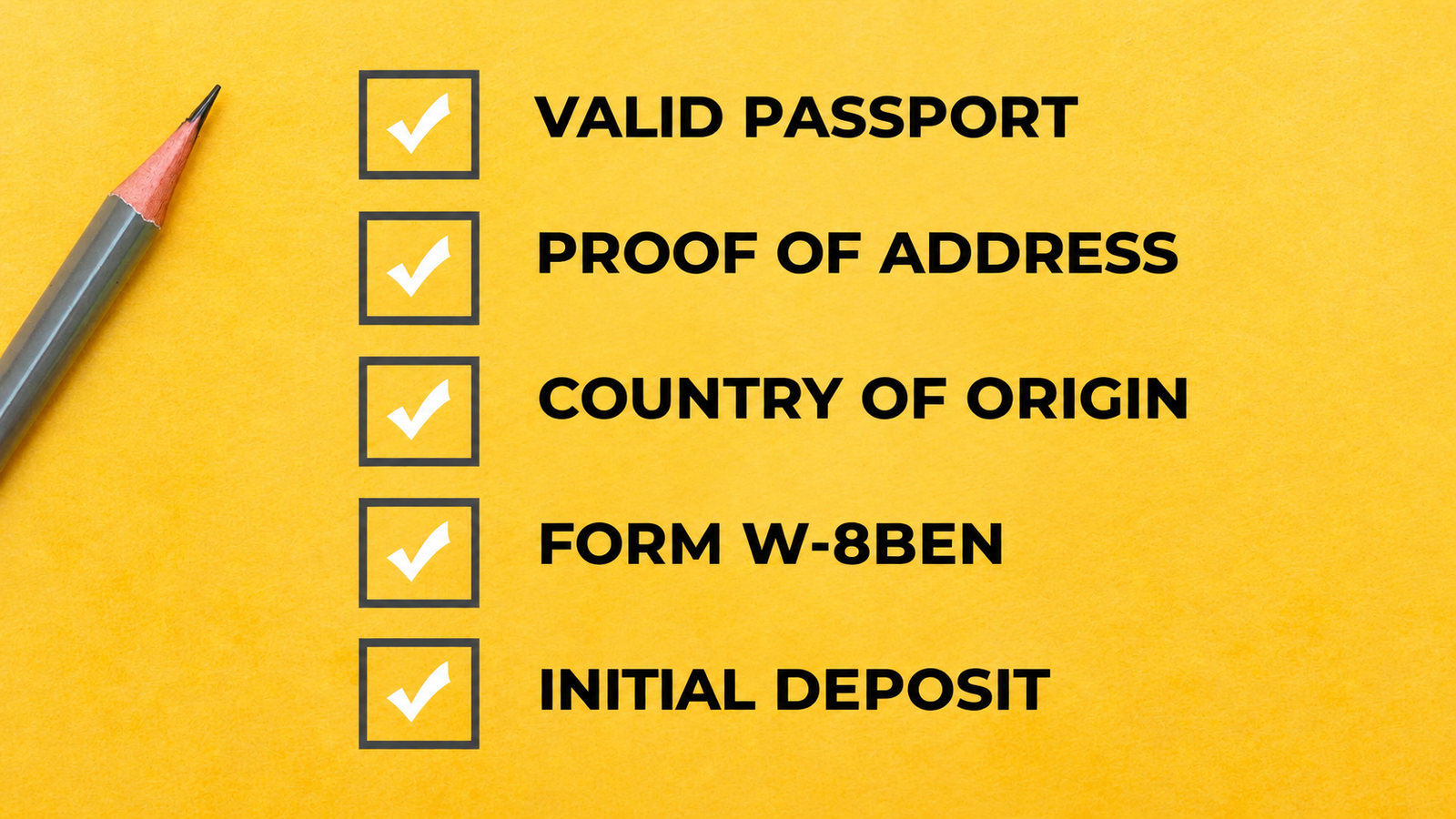
A bank may ask for documents such as:
- A valid passport.
- Proof of your home address outside the United States.
- A U.S. address, if one is available or required.
- A U.S. phone number and email address.
- Information about your job, business, and expected account activity.
- Bank statements or records showing the source of your funds.
- An initial deposit.
- Company documents if you are opening an account for an LLC.
Some buyers may also have an Individual Taxpayer Identification Number, known as an ITIN. An ITIN is a number issued by the IRS for federal tax purposes to certain people who are not eligible for a Social Security number. It does not provide immigration status, permission to work in the United States, or a guarantee of bank-account approval.
If you need an ITIN for a valid federal tax purpose, the IRS states that applicants generally use Form W-7 and provide documents that prove identity and foreign status. A foreign passport can establish both identity and foreign status for an ITIN application.
For banking requirements, contact the financial institution directly before starting an application or transferring money.
H2: Why a U.S. bank account can help international buyers
Opening a U.S. bank account as a foreign buyer can provide better organization throughout the buying process. It can also make it easier to manage your property after closing.
Organizing the earnest money deposit
After a seller accepts your offer, the purchase contract may require an earnest money deposit. This is money placed in escrow to show that you are serious about purchasing the property.
The contract should explain the deposit amount, the deadline, the escrow holder, and what happens if the transaction does not close. Your real estate agent can help you understand the timeline, while the title company or closing attorney can confirm approved payment instructions.
A U.S. bank account may make it easier to keep this money separate from your everyday finances. Still, direct international wire transfers may also be possible in some transactions.
Preparing your down payment
If you are using financing, the down payment for a foreign buyer in Florida depends on the lender, loan program, property type, buyer profile, occupancy plans, and financial documentation.
Do not assume that all foreign buyers need the same down payment. A lender may request different documentation from an international buyer than from a U.S. resident with established credit history.
Before moving money, ask the lender:
- How much down payment is required for your specific loan.
- Which documents are needed to verify your assets.
- How long your funds must be documented before closing.
- Whether money can come from a foreign bank account.
- Whether gift funds are allowed and how they must be documented.
- Whether the lender needs records showing the entire movement of the money.
Keeping clear records from the beginning may reduce unnecessary delays.
Planning for closing costs
Your total budget should include more than the purchase price and down payment.
Florida closing costs can include title-related charges, lender fees, appraisal costs, inspections, insurance, recording fees, prepaid items, association application charges, property tax adjustments, and other transaction-specific expenses.
The costs can change depending on whether you are paying cash or financing, where the property is located, the purchase price, the type of property, and the terms negotiated in the contract.
Ask for a written estimate from the lender and title company. This will help you know how much money you need to have available before closing.
How does an escrow account work in Florida real estate?
An escrow account in a Florida real estate transaction is used to hold funds while the transaction moves toward closing.
For an international buyer, escrow can be especially important because the buyer may be transferring funds from outside the United States. The title company or closing attorney typically provides instructions about where funds must be sent and when they are due.
The escrow process can include:
- The buyer signs a purchase contract.
- The buyer sends the earnest money deposit according to the contract deadline.
- The title company or closing attorney holds the funds as required.
- Inspections, financing, title review, association approval, and other contract steps are completed.
- The buyer sends the final funds required for closing.
- The transaction closes, and ownership is transferred according to the closing documents.
The exact process can vary. Your title company or closing attorney should explain the wire instructions, deadlines, and documents needed for your purchase.
How to prepare an international wire transfer for a real estate closing
International wire transfers for real estate require planning. They may involve currency conversion, sending-bank fees, receiving-bank fees, intermediary banks, transfer limits, and additional reviews.
Start preparing early—ideally before you make an offer or immediately after your offer is accepted.
Keep source-of-funds documents ready
Banks, lenders, and closing professionals may ask you to show where your funds came from. This is commonly called source-of-funds documentation.
Examples may include:
- Recent bank statements.
- Savings records.
- Investment account statements.
- Business income documentation.
- Sale documents for another property.
- Inheritance records, when applicable.
- Records showing transfers between accounts in your name.
If funds move through several accounts, keep a clear record of each transfer. Large or unusual transfers may lead to additional questions from your bank or lender.
Confirm wire instructions safely
Wire fraud is one of the most important risks to understand before a real estate closing.
Scammers may send emails that look like they came from a real estate agent, lender, attorney, or title company. The email may include fake wire instructions and ask you to send your closing funds to a fraudulent account.
The Consumer Financial Protection Bureau advises homebuyers to confirm closing instructions with trusted representatives by phone or in person, using contact information they already know. It specifically warns buyers not to follow instructions received only by email and not to use phone numbers or links included in a suspicious message.
Before you send any wire:
- Call the title company or closing attorney using a verified phone number.
- Confirm the account name, bank name, routing number, and account number.
- Confirm the exact amount and transfer deadline.
- Ask whether the recipient has changed any wire instructions.
- Do not send personal financial documents by unsecured email.
- Keep your wire confirmation and share it only through the approved process.
If you believe you sent money to the wrong account, contact your bank or wire-transfer company immediately and ask about a wire recall. The CFPB notes that quick action may increase the chance of recovering funds.
Can a foreign buyer open a U.S. bank account remotely?
Some financial institutions may offer remote or international-client banking options, but this is not guaranteed.
Many banks may require the applicant to visit a branch in person. Others may request additional identity, address, tax, business, or source-of-funds documents before making a decision.
For this reason, do not build your real estate timeline around the assumption that you can open a U.S. account online from abroad.
Instead, ask the bank these questions before you begin:
- Do you open accounts for non-U.S. residents?
- Is an in-person appointment required?
- What documents do you accept from my country?
- Do I need an ITIN or can I apply without one?
- What are the minimum balance and monthly fee requirements?
- Can I receive international wire transfers?
- Are there limits or holding periods for large incoming transfers?
- Can I open an account for an LLC or other business entity?
A qualified banking professional can explain the current requirements for your specific situation.
Buying property in Palm Beach County, Boynton Beach, Miami, or Broward
Every South Florida buyer has different goals.
You may be looking for a single-family home in Palm Beach County, a condominium in Boynton Beach, an investment property in Miami, or a second home in Broward County. Your financial plan should match the property and the way you plan to use it.
For example:
- A buyer moving to Florida may need a plan for regular household expenses, utilities, insurance, and local service providers.
- A buyer purchasing a vacation home may want to organize recurring bills and maintenance costs.
- A rental investor may need a way to receive income and pay property management, repairs, HOA, or condominium fees.
- A buyer using financing may need to follow more detailed asset and fund-verification procedures.
Before making an offer, create a complete budget that includes the purchase price, earnest money deposit, down payment, estimated closing costs, insurance, association fees, taxes, maintenance, and any planned improvements.
H2: Build your Florida purchase plan before making an offer
Buying property from abroad does not have to be confusing. The key is preparation.
A U.S. bank account may be useful, but it is only one part of the process. You also need to understand your purchase timeline, escrow requirements, source-of-funds documentation, transfer deadlines, estimated costs, and local property options.
Angela Properties can help you explore homes and investment opportunities in Palm Beach County, Boynton Beach, Miami, Broward County, and other South Florida communities. We can help you understand the local real estate process and coordinate with the professionals involved in your transaction.
This article is for general educational purposes only. It is not legal, tax, banking, mortgage, financial, or investment advice. Bank policies, lending requirements, transfer rules, and real estate procedures may change. Consult qualified legal, tax, banking, mortgage, and financial professionals for advice based on your individual circumstances.
Are you planning to buy, invest, relocate, or sell in Palm Beach County, Boynton Beach, Miami, Broward County, or another South Florida market?
Contact Angela At LPT Realty today to discuss your property goals, understand the local buying process, and create a clear plan for your Florida real estate journey.
Frequently Asked Questions
1. Do foreign buyers need a U.S. bank account to buy property in Florida?
Not always. In many transactions, a foreign buyer may be able to send funds from an overseas bank directly to the escrow account provided by the title company or closing attorney. However, a U.S. bank account can help organize deposits, property expenses, rental income, and future payments.
2. Can a non-U.S. citizen open a bank account in Florida?
Some banks may allow non-U.S. citizens to apply for an account, but requirements vary by institution. A bank may ask for a valid passport, proof of address, tax identification information if applicable, source-of-funds documents, and sometimes an in-person appointment.
3. Can a foreign buyer open a U.S. bank account remotely?
It depends on the bank. Some institutions may offer international-client or remote options for eligible applicants, while others require an in-person visit to a branch. Contact the bank directly and confirm its current requirements before planning your purchase timeline.
4. Do I need an ITIN to open a U.S. bank account?
Not always. Each bank sets its own requirements. An Individual Taxpayer Identification Number, or ITIN, is a federal tax-processing number for certain people who are not eligible for a Social Security number; it is not work authorization or proof of immigration status. Ask the bank which identification and tax documents it accepts.
5. How much down payment does a foreign buyer need in Florida?
There is no single down payment amount for every foreign buyer. The amount depends on the lender, loan program, property type, purchase price, occupancy plans, financial profile, and documentation. If you are financing, request a written estimate from a lender that works with foreign-national buyers before making an offer.
6. Can I use funds from my bank account outside the United States?
In many cases, international buyers may transfer funds from a foreign bank account for a Florida property purchase. Your lender, title company, closing attorney, and bank may request documents showing where the funds came from and how they moved between accounts. Start organizing these records early.
7. What documents may be needed to show the source of funds?
Requirements vary, but you may be asked for recent bank statements, investment-account statements, business-income documents, sale documents for another property, inheritance records, or transfer records between accounts. Keep the full financial trail available, especially if you are using a mortgage..
8. How does an escrow account work in Florida real estate?
An escrow account holds money during the purchase process. After you sign a purchase contract, you may send an earnest money deposit to the escrow holder named in the contract. The title company or closing attorney generally helps coordinate the funds and transaction requirements until closing.
9. How long does an international wire transfer take for a real estate closing?
The timing can vary because of the sending bank, receiving bank, currency conversion, intermediary banks, transfer limits, compliance reviews, and holidays. Ask your bank and the title company about timing well before the closing date. Do not wait until the last minute to begin the transfer process.
10.How can I protect myself from wire fraud when buying Florida real estate?
Always verify wire instructions directly with the title company or closing attorney using a trusted phone number you already have. Do not follow last-minute instructions sent only by email, and do not use phone numbers included in a suspicious message. The Consumer Financial Protection Bureau warns that scammers may impersonate trusted real estate professionals to redirect a buyer’s closing funds.